Study on establishment of microbiota in infancy and its effect on health in later life
Baby gut microbiota:
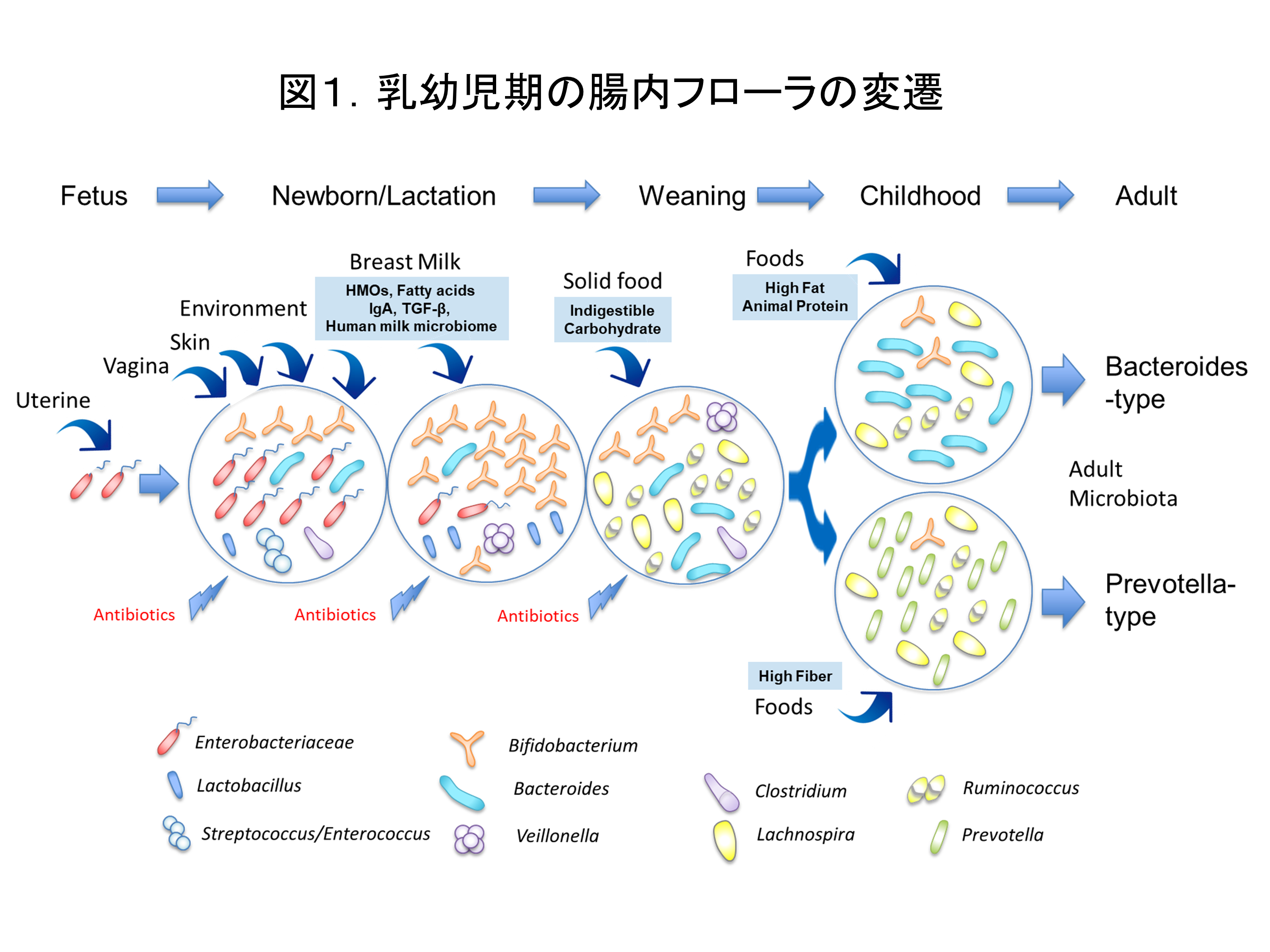
During delivery from birth canal, microbes start to colonize in sterile digestive tract of newborn. Some are from environment outside body and some are from mother's skin, but eventually, Bifidobacteria known as beneficial commensals dominate in healthy babies because of special capability to utilize oligosaccharide rich in human mother's milk. We attract interest in the process of establishment of baby gut microbiota in relation to growth and health of babies.(図1)
Relationship of establishment of gut microbiota in infancy with allergy development in later life:
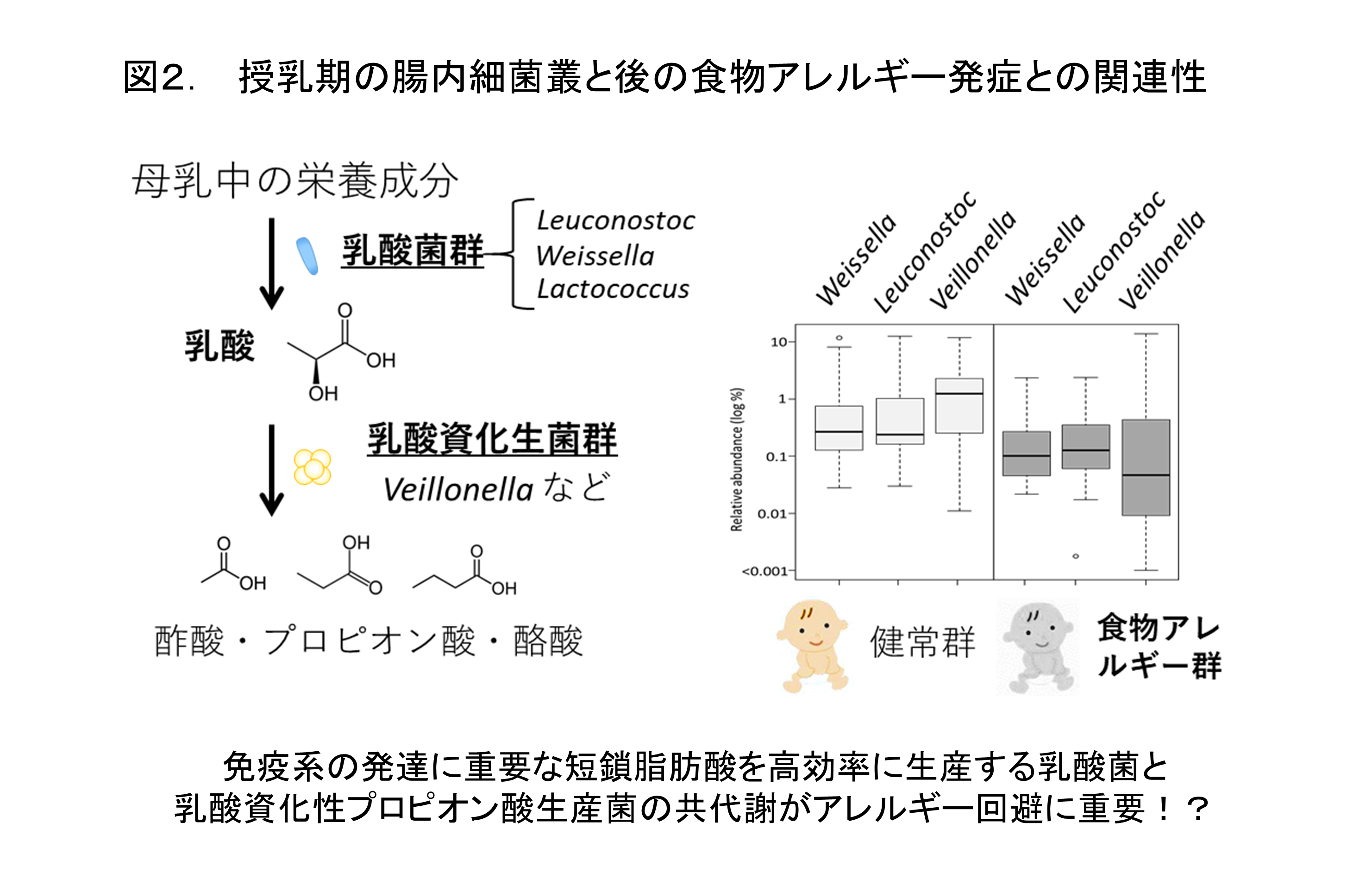
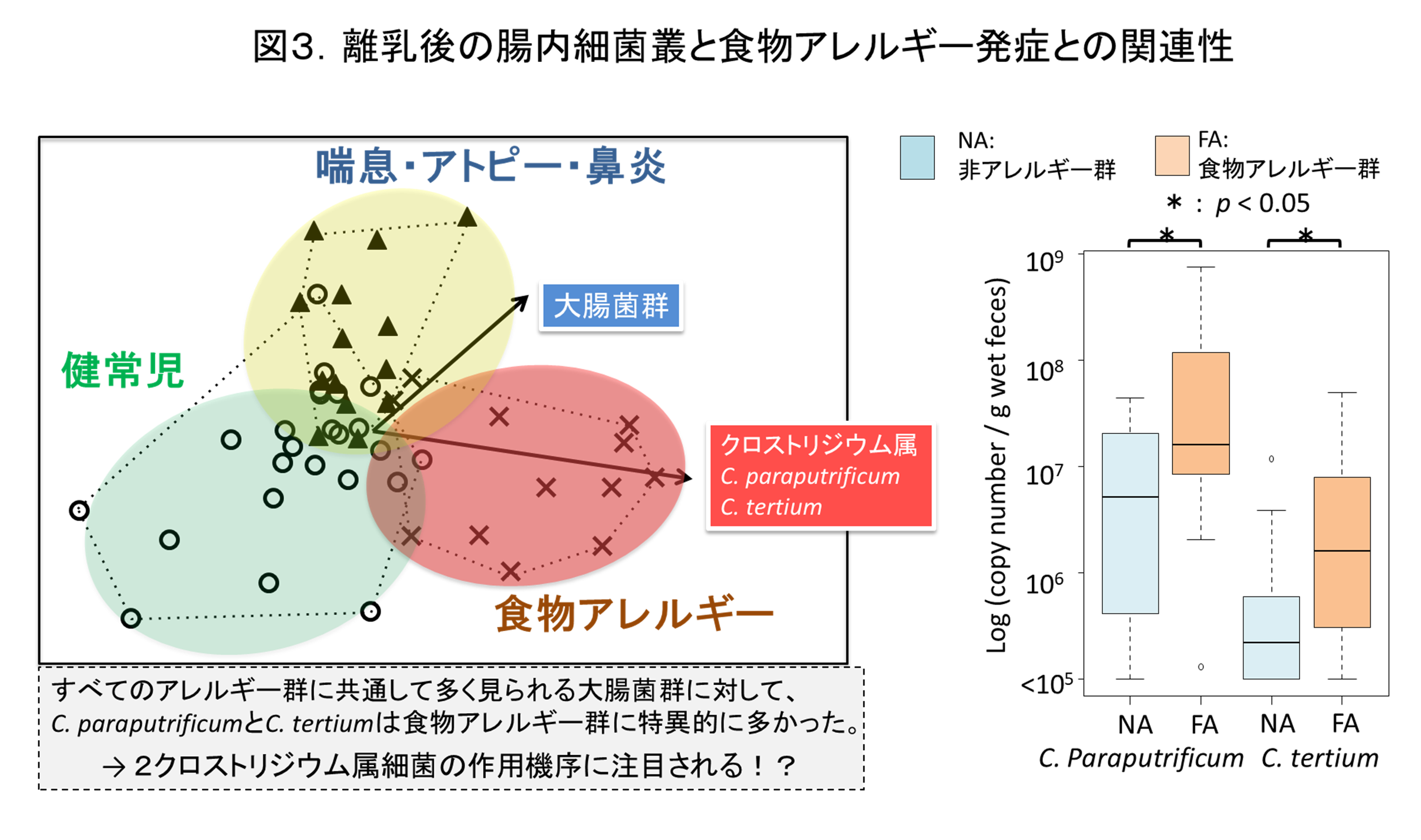
We collected fecal samples from newborn babies and investigate their microbiota in relation to allergy development in later life. As a result, we found that babies in allergic group had higher level of Bacteroides and lower level of Lactic Acid Bacteria such as Leuconostoc and Pediococcus and propionate-producing bacteria, e.g., Veillonella, before weaning and high level of Clostridium paraputrificum after weaning.
Relationship of development of gut microbiota with bile acids:
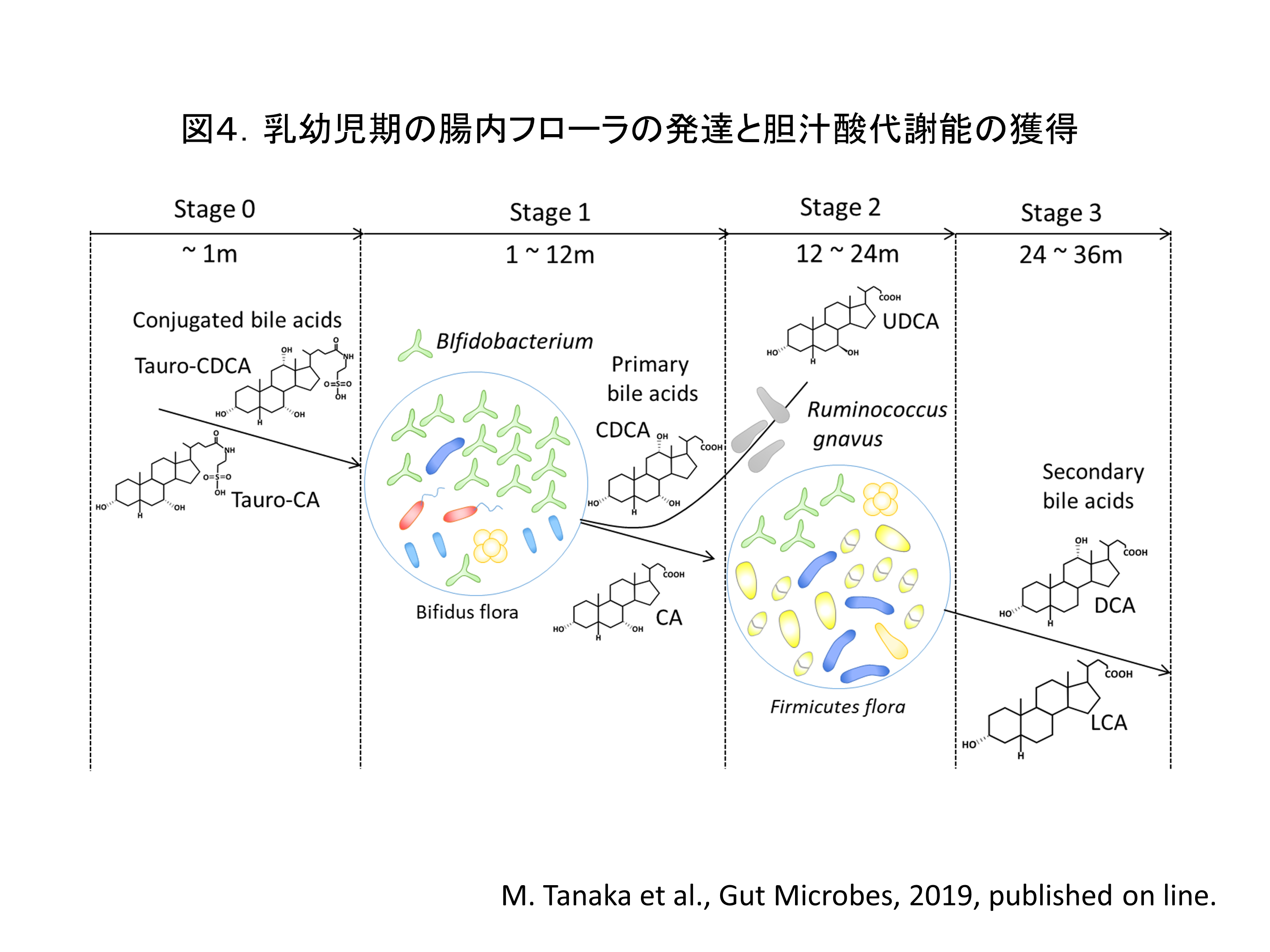
Bile acids are main component of bile salt involved in intestinal absorption of dietary lipid. In human adult, bile acids are synthesized in liver and approximately 0.5 g of bile acids are secreted into digetive tract, 95% of which are reabsorbed and recirculated in the body. But the remained 5% of bile acid is metabolized to secondary bile acids by microbes in intestine. Secondary bile acids are generally more toxic than primary bile acids and the high level of secondary bile is known as a risk factor for colon cancer. On the other hand, new aspect of bile acids has been recently found to be involved in homeostasis of human body through the interaction with host membrane or nuclear receptors, resulting in the promotion of insulin secretion. In our previous study, we carefully monitored the succession of bile acid profile in infancy. The result indicated drastic change in the profile, in which early colonization of Bifidobacteria was involved in deconjugation of bile acids and at the weaning period, ursodeoxy cholic acid was increased with the colonization of Ruminococcus, and after the weaning, secondary bile acids were started to be produced with the establishment of adult-type gut microbiota. Namely, metabolic activity of bile acids drastically changed with change in gut microbiota in infacy. It warrants further study on the effect of the drastic chang in bile acid metabolism in infancy on the host growth and health.
Change in mycobiome in infancy:
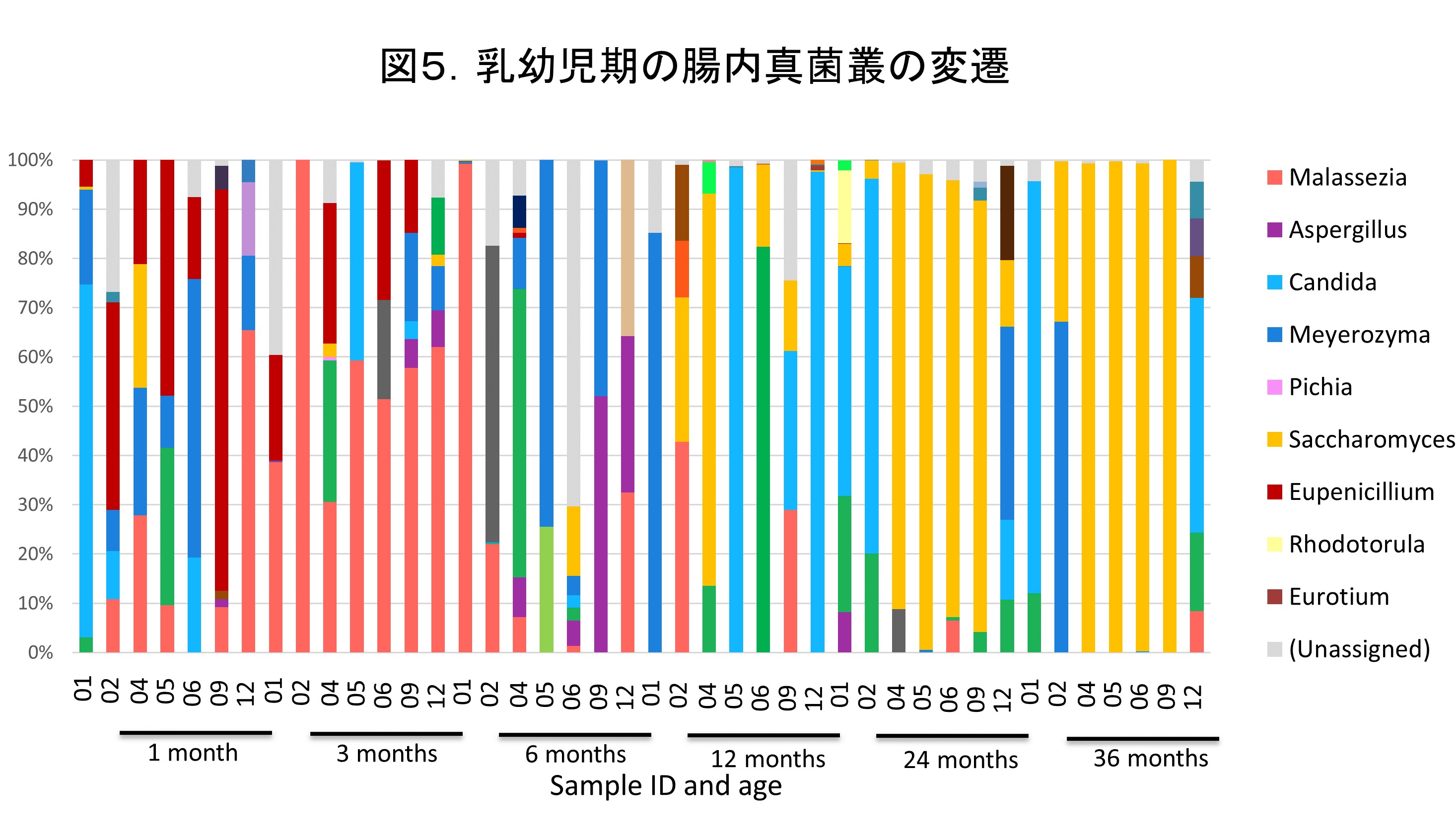
In human digestive tract, not only bacteria but also fungi and yeasts are also colonized. However, its information is limited. Thus far, we have investigated the colonization of fungi and yeast in the first two years. As a result, we found that Eupenicillium which may be from environment, was initially colonized within one month after the birth, and subsequently at 3 month, genus Malassezia known as its presence on the skin, at six months, Candida and Meyerozyma, known as opportunistic pathogens, were clonized between 6 to 12 months, then Saccharomyces were colonized around two months. Now we attracted interest in the effect of these fungi colonization on the growth and health of babies.
Publications
Original Papers
Review
Member/Project
<2022>
Riko Mishima(D3)・Study on gut mycobiome in infancy
????(??)・Metagenomic study on Asian infant microbiome