Laboratory of Microbial TechnologyFaculty of Agriculture/Graduate School of Bioresource and Bioenvironmental Sciences, Kyushu University
STUDY ON MECHANISM OF QUORUM SENSING-MEDIATED CONTROL OF TOXIN PRODUCTION in INTESTINAL PATHOGENS
What is "Quorum sensing":
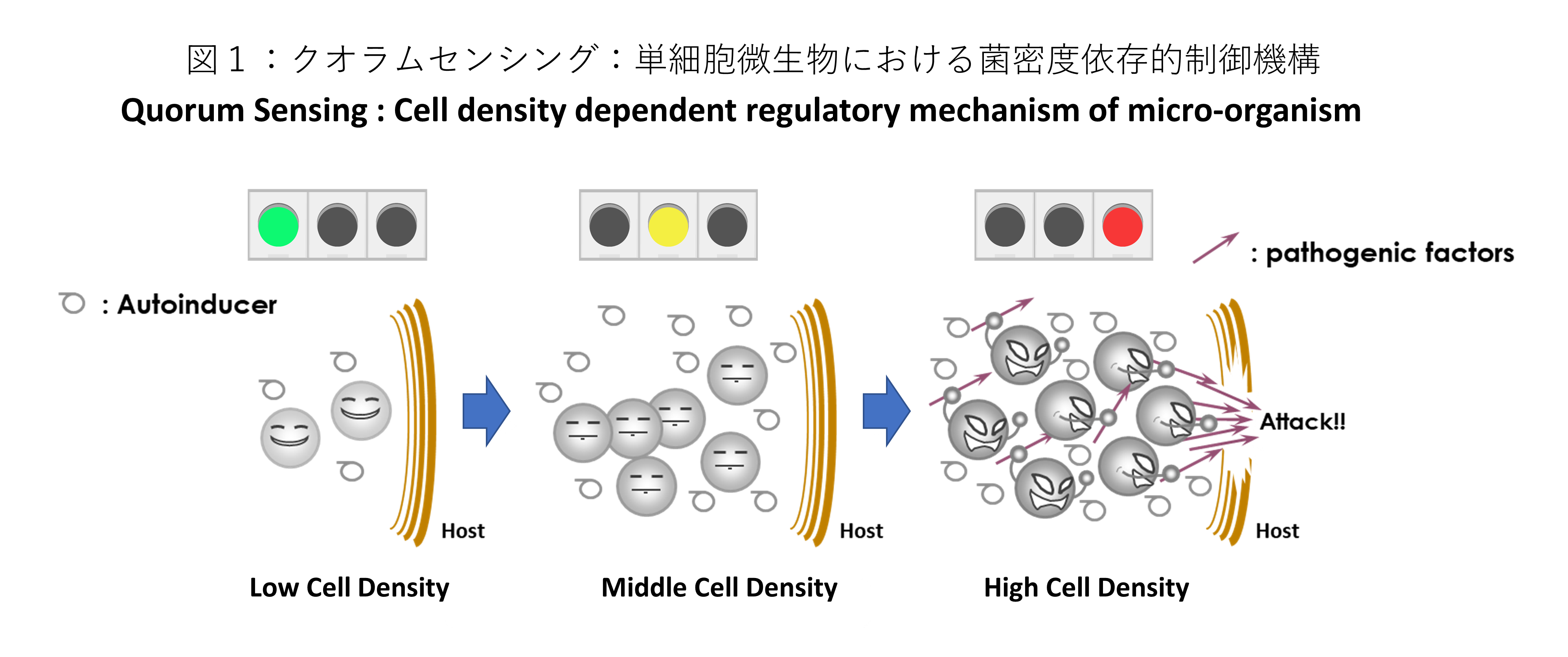
Although bacteria are unicellular organisms, they behave as group while communicating between cells. Quorum sensing (QS) is one of the communication systems that achieve cell-density dependent phenotype expresion. The chemical signal is called "autoinducer", "pheromone", or "quormome", and transmits the presence of same group to the surrounding cells. In consequence, certain group of bacteria switch on certain phenotype at the same time. Notably, pathogenic bacteria employ QS to control the expression of toxin production or so on. This phenomenon is recognized as a strategy enabling efficient infection with enough number of cells (Fig 1).
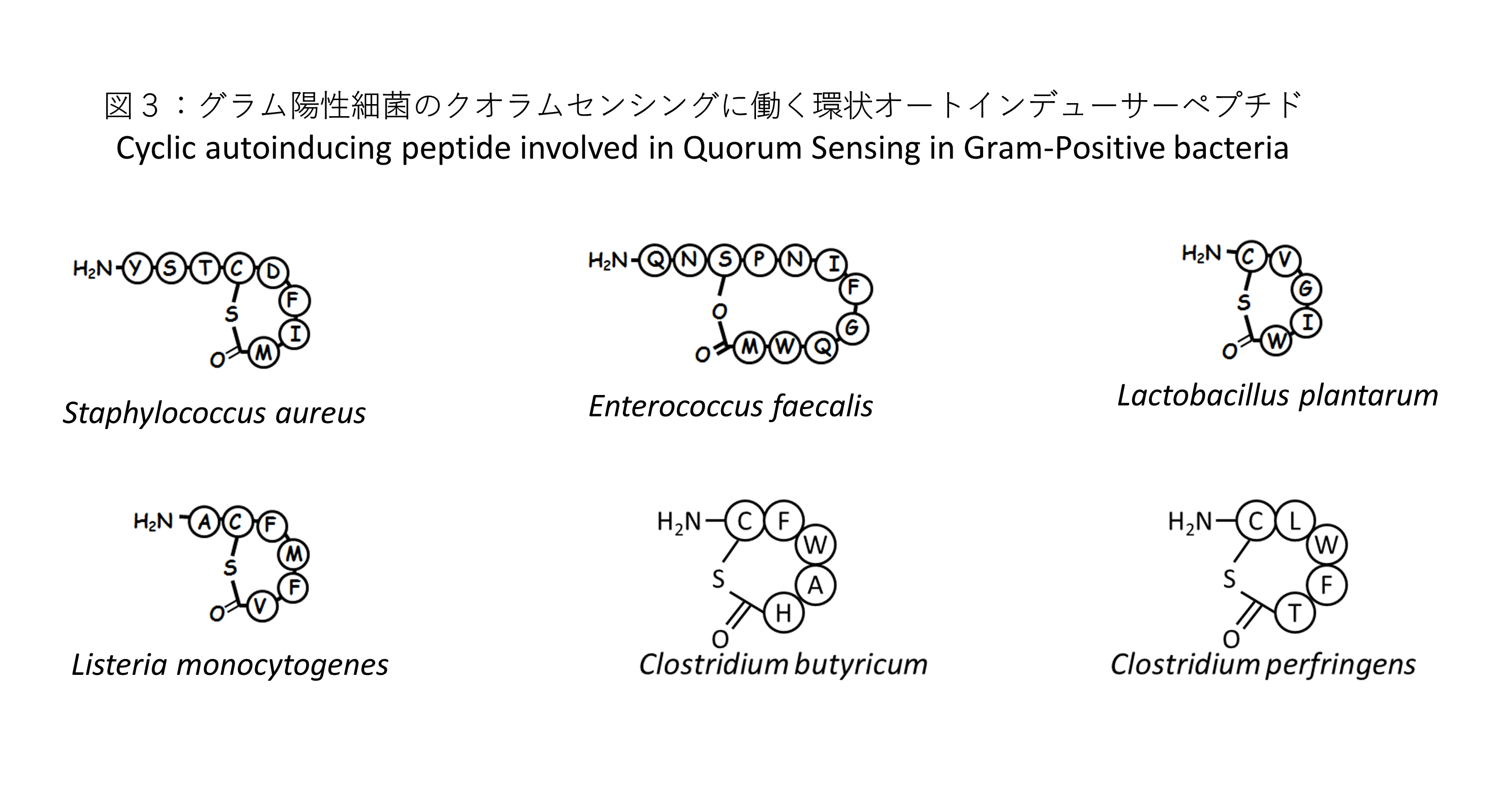
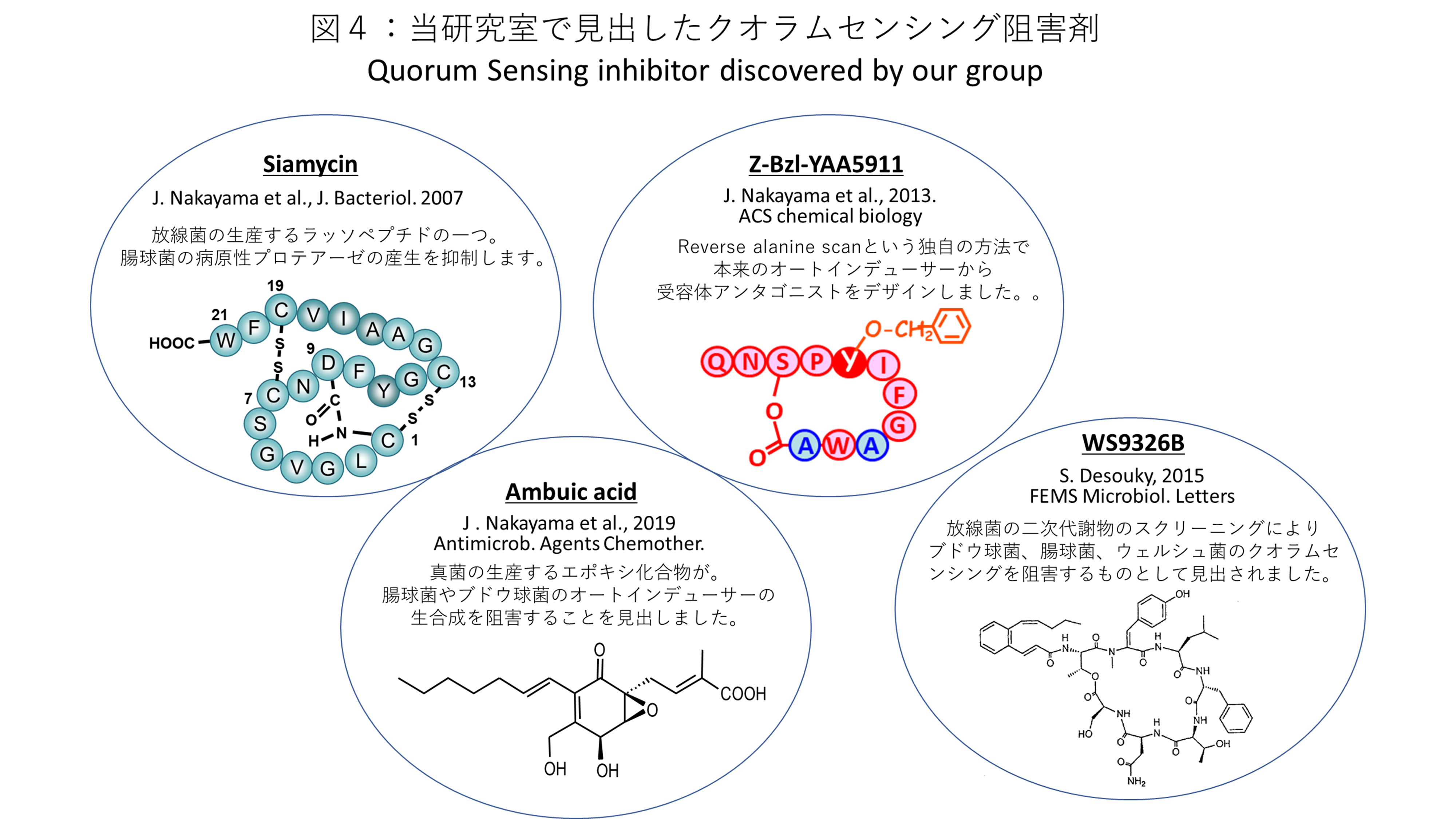
We have focussed on the quorum sensing of Gram-positive bacteria, particularly Enterococcus faecalis having a problem of emergence of vancomysin resistant strains and Staphylococcus aureus having a problem of emergence of methicillin resistant strain, both useing cyclic peptide as autoinduce(Fig 2)) and developed inhibitors targeting the cyclic peptide-mediate QS by using two approaches, namely screening of natural compounds and rational design and synthesis of inhibitors.
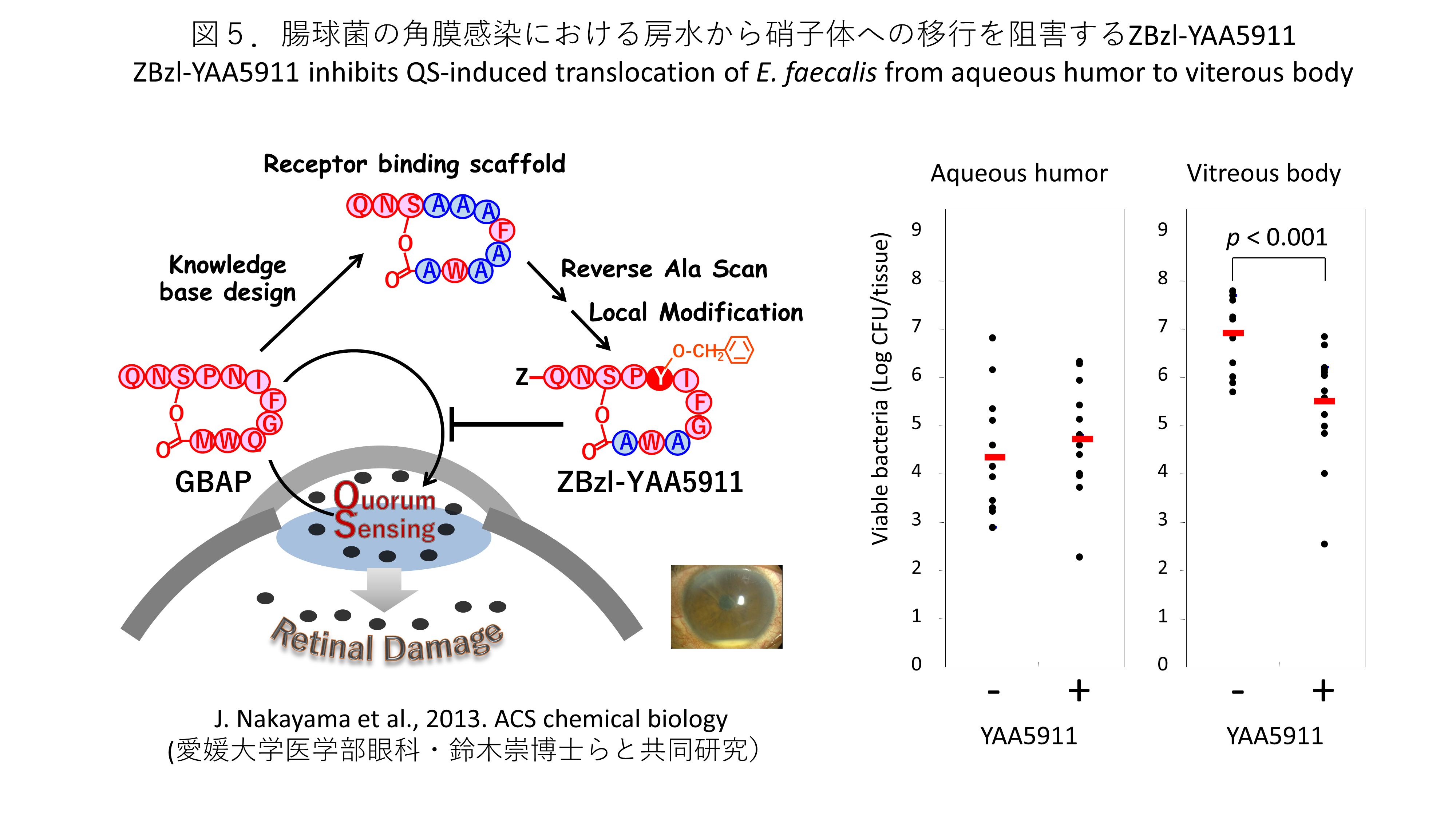
Particularly, we have developed a synthetic peptide, Z-Bzl-YAA5911, as a QS inhibitors which decrease retinal damage by gelatinase whose production is controlled by QS in E. faecalis(Fig 5)。
STUDY ON QUORUM SENSING IN INTESTINE:
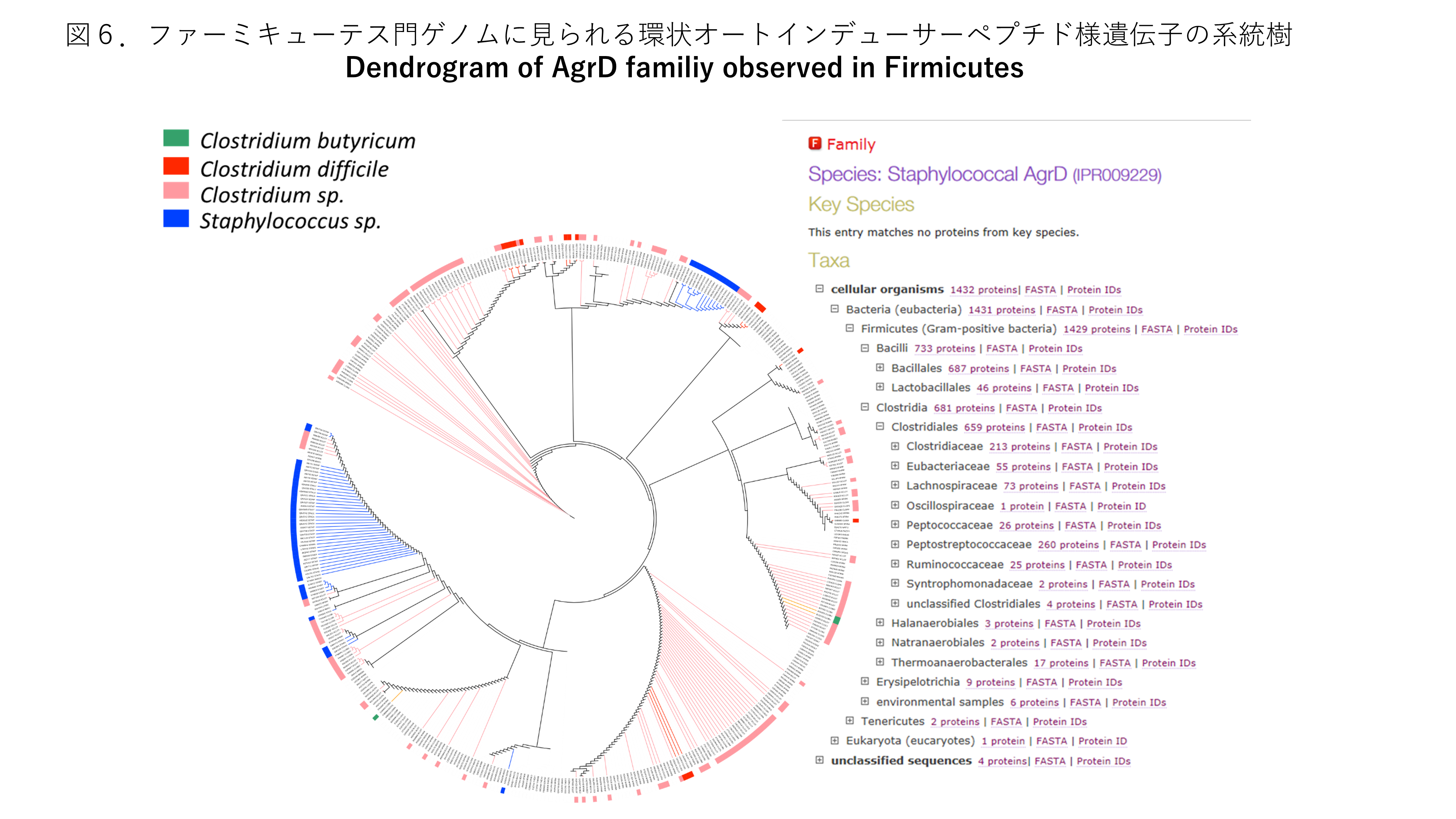
Recently, we further progress QS in gut microbiota. Notably, we focused on Firmicutes, particularly Clostridiales including beneficial species producing short chain fatty acids involved in control of immune system and metabolic homeostasis and non-beneficial species producing secondary bile acids to promote cancer development or toxins causing food poisoning or inflamatory bowel diseases. Particularly, we focused on agr gene clusters which are present in many Firmicues genomes, suggesting that the AIP-mediated QS are actively performed in intestine(Fig 6). Although phenotypes controlled by the QS are mostly unknown, it is suspected that the QS is employed to survive in the competitive environment in gut microbiota. We aim to clarify them one by one and will eventually develop a method to artificially control QS for the conditioning of gut microbiota.
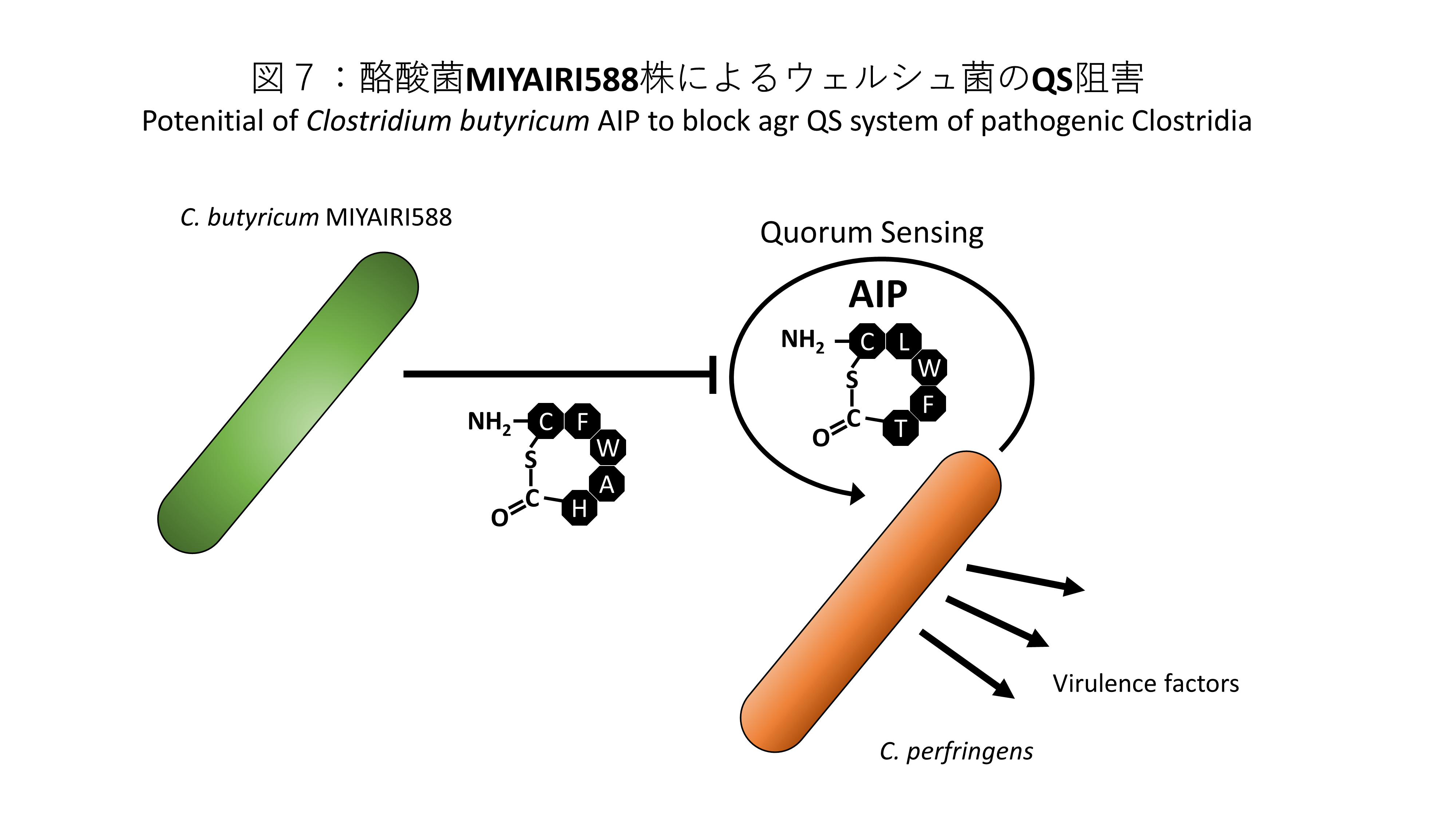
Thus far, we have succeeded in obtaining antagonistic peptides of AIP of Clostridium perfringens. C. perfringens employs AIPCp(Thiolactone Cys-Leu-Trp-Phe-Thr) for the control of production of θ toxin (perfringolysin O). Based on the structure of AIPCp, we have developed an antagonist (Z-Cys-Leu-Trp-Ala-Ser thiolactone) with IC50=0.72 μM (Pal Singh, R. et al., FEMS Microbiol. Letters 2015, 362(22))。
Moreover, we are interested in the QS of a butyrate-producing probiotics, Clostridium butyricum Miyairi588. Notably, we found that AIP of Miyairi588 antagonistically inhibits QS of C. perfringens (WO2015119170AI). This study has been performed in collaboration with the group of Miyarisan pharmaceutical Co.LTD and Prof. Shimizu in Kanazawa Univ. and Prof. Ohtani in Tokai Univ.(Fig 7).
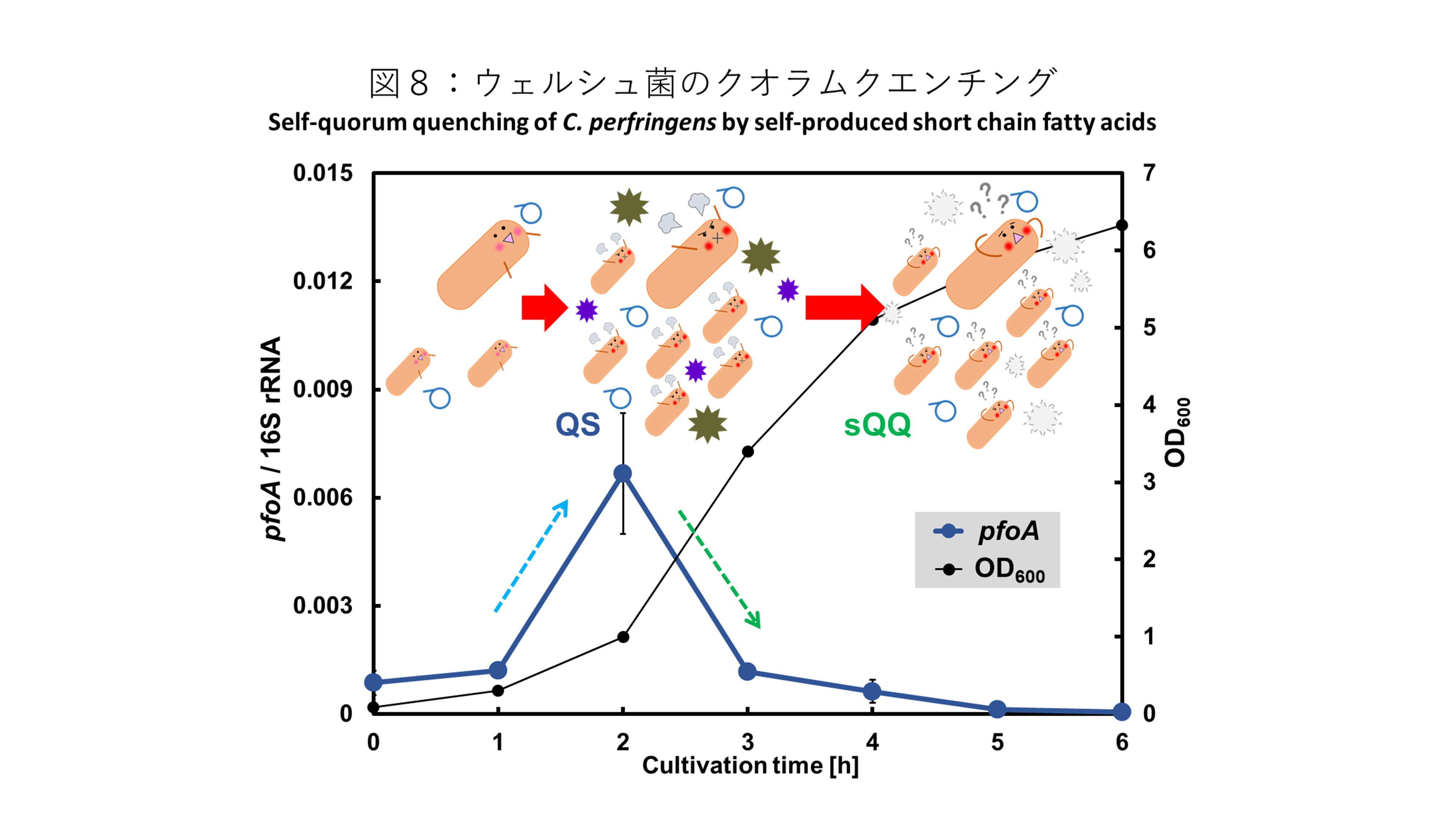
Furthremore, we have studied on a phenomenon of quorum quenching (QQ) of C. perfringens. Interestingly, QS of C. perfringens peaks at mid-log phase and is then suddenly quenched. We found that the QQ is induced by acetate and propionate produced by C. perfringens itself. We further found that the QQ is also induced by inorganic acid. Pathogen control using this QQ phenomenon is expected as a new strategy for the control of pathogen (Fig 7)(K. Adachi et al., J. Biosci. Bioeng., 2018, 125(5), 525-531. doi: 10.1016/j.jbiosc.2017.12.019)。
REFERENCES
Original Papers
Desouky SE, Abu-Elghait M, Fayed EA, Selim S, Yousuf B, Igarashi Y, Abdel-
Wahab BA, Mohammed Alsuhaibani A, Sonomoto K, Nakayama J. Secondary Metabolites
of Actinomycetales as Potent Quorum Sensing Inhibitors Targeting Gram-Positive
Pathogens: In Vitro and In Silico Study. (2022) Metabolites.15;12(3):246.
doi: 10.3390/metabo12030246. PMID: 35323689; PMCID: PMC8955454.
Littlewood, S., Tattersall, H., Hughes, C. S., Hussain, R., Ma, P., Harding, S. E., Nakayama, J., Phillips-Jones, M. K., The gelatinase biosynthesis-activating pheromone binds and stabilises the FsrB membrane protein in Enterococcus faecalis quorum sensing (2020) FEMS Letters, 594(3): 553-563. doi:10.1002/1873-3468.13634.
Adachi, K., Ohtani, K., Kawano, M., Singh, R.P., Yousuf, B., Sonomoto, K., Shimizu, T., Nakayama, J.* Metabolic dependent and independent pH-drop shuts down VirSR quorum sensing in Clostridium perfringens (2018) J. Bioscience and Bioengineering, 125(5), 525-531. doi: 10.1016/j.jbiosc.2017.12.019.
Igarashi, Y., Yamamoto, K., Fukuda, T., Shojima, A., Nakayama, J., Carro, L., Trujillo, M.E. Arthroamide, a cyclic depsipeptide with quorum sensing inhibitory activity from Arthrobacter sp. (2015) Journal of Natural Products, 78(11), 2827-2831. doi:10.1021/acs.jnatprod.5b00540.
Igarashi, Y., Gohda, F., Kadoshima, T., Fukuda, T., Hanafusa, T., Shojima, A., Nakayama, J., Bills, G.F., Peterson, S. Avellanin C, an inhibitor of quorum-sensing signaling in Staphylococcus aureus, from Hamigera ingelheimensis (2015) Journal of Antibiotics 68(11), 707-710. doi: 10.1038/ja.2015.50.
Pal Singh, R., Okubo, K.-I, Ohtani, K., Adachi, K., Sonomoto, K., Nakayama, J.* Rationale design of quorum-quenching peptides that target the VirSR system of Clostridium perfringens (2015) FEMS Microbiology Letters 362(22), fnv188. doi:10.1093/femsle/fnv188.
Desouky, S.E., Shojima, A., Singh, R.P., Matsufuji, T., Igarashi, Y., Suzuki, T., Yamagaki, T., Okubo, K.-I., Ohtani, K., Sonomoto, K., Nakayama, J.* Cyclodepsipeptides produced by actinomycetes inhibit cyclic-peptide-mediated quorum sensing in Gram-positive bacteria (2015) FEMS Microbiology Letters 362(14), fnv109. doi:10.1093/femsle/fnv109.
Ribeiro, T., Teixeira, N., Yokohata, R., Nakayama, J., Gilmore, M.S., Lopes, M.F.S. Transcriptomic study reveals new pathways and genes involved in Enterococcus faecalis V583 response to a therapeutic dose of vancomycin (2014) Archives of Clinical Microbiology 5(1). doi: 10.3823/277.
Desouky, S.E., Nishiguchi, K., Zendo, T., Igarashi, Y., Williams, P., Sonomoto, K., Nakayama, J.* High-throughput screening of inhibitors targeting Agr/Fsr quorum sensing in Staphylococcus aureus and Enterococcus faecalis (2013) Bioscience, Biotechnology and Biochemistry 77(5), 923-927. doi:10.1271/bbb.120769.
Teixeira, N., Varahan, S., Gorman, M.J., Palmer, K.L., Zaidman-Remy, A., Yokohata, R., Nakayama, J., Hancock, L.E., Jacinto, A., Gilmore, M.S., de Fatima Silva Lopes, M. Drosophila host model reveals new Enterococcus faecalis quorum-sensing associated virulence factors (2013) PLoS ONE 8(5), e64740. doi:10.1371/journal.pone.0064740.
Nakayama, J.*, Yokohata, R., Sato, M., Suzuki, T., Matsufuji, T., Nishiguchi, K., Kawai, T., Yamanaka, Y., Nagata, K., Tanokura, M., Sonomoto, K. Development of a peptide antagonist against fsr quorum sensing of Enterococcus faecalis (2013) ACS Chemical Biology 8(4), 804-811. doi:10.1021/cb300717f.
11. Phillips-Jones, M.K., Patching, S.G., Edara, S., Nakayama, J., Hussain, R., Siligardi, G. Interactions of the intact FsrC membrane histidine kinase with the tricyclic peptide inhibitor siamycin I revealed through synchrotron radiation circular dichroism (2013) Physical Chemistry Chemical Physics 15(2), 444-447. doi:10.1039/c2cp43722h.
Patching, S.G., Edara, S., Ma, P., Nakayama, J., Hussain, R., Siligardi, G., Phillips-Jones, M.K. Interactions of the intact FsrC membrane histidine kinase with its pheromone ligand GBAP revealed through synchrotron radiation circular dichroism (2012) Biochimica et Biophysica Acta Biomembranes 1818(7), 1595-1602. doi:10.1016/j.bbamem.2012.02.015.
Teixeira, N., Santos, S., Marujo, P., Yokohata, R., Iyer, V.S., Nakayama, J., Hancock, L.E., Serror, P., Lopes, M.F.S. The incongruent gelatinase genotype and phenotype in Enterococcus faecalis are due to shutting off the ability to respond to the gelatinase biosynthesis-activating pheromone (GBAP) quorum-sensing signal (2012) Microbiology (IF:1.027) 158(2), 519-528. doi:10.1099/mic.0.055574-0.
Ma, P., Nishiguchi, K., Yuille, H.M., Davis, L.M., Nakayama, J., Phillips-Jones, M.K. Anti-HIV siamycin i directly inhibits autophosphorylation activity of the bacterial FsrC quorum sensor and other ATP-dependent enzyme activities (2011) FEBS Letters 585(17), 2660-2664.doi:10.1016/j.febslet.2011.07.026.
Horita, S., Yamanaka, Y., Yamamura, A., Okada, A., Nakayama, J., Nagata, K., Tanokura, M. Crystallization and preliminary X-ray analysis of a putative sensor histidine kinase domain: The C-terminal domain of HksP4 from Aquifex aeolicus VF5 (2011) Acta Crystallographica Section F: Structural Biology and Crystallization Communications 67(7), 803-807. doi:10.1107/S1744309111018434.
Nakayama, J.*, Uemura, Y., Nishiguchi, K., Yoshimura, N., Igarashi, Y., Sonomoto, K. Ambuic acid inhibits the biosynthesis of cyclic peptide quormones in gram-positive bacteria (2009) Antimicrobial Agents and Chemotherapy 53(2), 580-586. doi:10.1128/AAC.00995-08.
Nishiguchi, K., Nagata, K., Tanokura, M., Sonomoto, K., Nakayama, J.* Structure-activity relationship of gelatinase biosynthesis-activating pheromone of Enterococcus faecalis (2009) Journal of Bacteriology 191(2), 641-650. doi:10.1128/JB.01029-08.
Fujii, T., Ingham, C., Nakayama, J., Beerthuyzen, M., Kunuki, R., Molenaar, D., Sturme, M., Vaughan, E., Kleerebezem, M., De Vos, W. Two homologous agr-like quorum-sensing systems cooperatively control adherence, cell morphology, and cell viability properties in Lactobacillus plantarum WCFS1 (2008) Journal of Bacteriology 190(23), 7655-7665. doi:10.1128/JB.01489-07.
Ma, P., Yuille, H.M., Blessie, V., Gohring, N., Igloi, Z., Nishiguchi, K., Nakayama, J., Henderson, P.J., Phillips-Jones, M.K. Expression, purification and activities of the entire family of intact membrane sensor kinases from Enterococcus faecalis. (2008) Molecular membrane biology 25(6/7), 449-473. doi:10.1080/09687680802359885.
Nakayama, J.*, Tanaka, E., Kariyama, R., Nagata, K., Nishiguchi, K., Mitsuhata, R., Uemura, Y., Tanokura, M., Kumon, H., Sonomoto, K. Siamycin attenuates fsr quorum sensing mediated by a gelatinase biosynthesis-activating pheromone in Enterococcus faecalis (2007) Journal of Bacteriology 189(4), 1358-1365. doi:10.1128/JB.00969-06.
Nakayama, J.*, Chen, S., Oyama, N., Nishiguchi, K., Azab, E.A., Tanaka, E., Kariyama, R., Sonomoto, K. Revised model for Enterococcus faecalis fsr quorum-sensing system: The small open reading frame fsrD encodes the gelatinase biosynthesis-activating pheromone propeptide corresponding to staphylococcal AgrD (2006) Journal of Bacteriology 188(23) 8321-8326. doi:10.1128/JB.00865-06.
Sturme, M.H.J., Nakayama, J., Molenaar, D., Murakami, Y., Kunugi, R., Fujii, T., Vaughan, E.E., Kleerebezem, M., De Vos, W.M. An agr-like two-component regulatory system in Lactobacillus plantarum is involved in production of a novel cyclic peptide and regulation of adherence (2005) Journal of Bacteriology 187(15), 5224-5235. doi:10.1128/JB.187.15.5224-5235.2005.
Nakayama, J.*, Akkermans, A.D.L., De Vos, W.M. High-throughput PCR screening of genes for three-component regulatory system putatively involved in quorum sensing from low-G+C gram-positive bacteria (2003) Bioscience, Biotechnology and Biochemistry 67(3), 480-489. doi:10.1271/bbb.67.480.
Nakayama, J.*, Kariyama, R., Kumon, H. Description of a 23.9-kilobase chromosomal deletion containing a region encoding fsr genes which mainly determines the gelatinase-negative phenotype of clinical isolates of Enterococcus faecalis in urine (2002) Applied and Environmental Microbiology 68(6), 3152-3155. doi:10.1128/AEM.68.6.3152-3155.2002.
Nakayama, J.*, Cao, Y., Horii, T., Sakuda, S., Nagasawa, H. Chemical synthesis and biological activity of the gelatinase biosynthesis-activating pheromone of Enterococcus faecalis and its analogs (2001) Bioscience, Biotechnology and Biochemistry 65(10), 2322-2325. doi:10.1271/bbb.65.2322.
Nakayama, J.*, Cao, Y., Horii, T., Sakuda, S., Akkermans, A.D.L., De Vos, W.M., Nagasawa, H. Gelatinase biosynthesis-activating pheromone: A peptide lactone that mediates a quorum sensing in Enterococcus faecalis (2001) Molecular Microbiology 41(1),145-154. doi: 10.1046/j.1365-2958.2001.02486.x.
Jiro Nakayama, Ravindra Pal Singh, Quorum quenching strategy targeting Gram-positive pathogenic bacteria, Advances in Microbiology and Infectious Diseases and Public Health, 2016.05