Elucidation of the genetic mechanism of disease resistance of the endangered endemic Asparagus kiusianus and development of conservation techniques.
Elucidation of the genetic mechanism of disease resistance of the endangered endemic Asparagus kiusianus and development of conservation techniques.
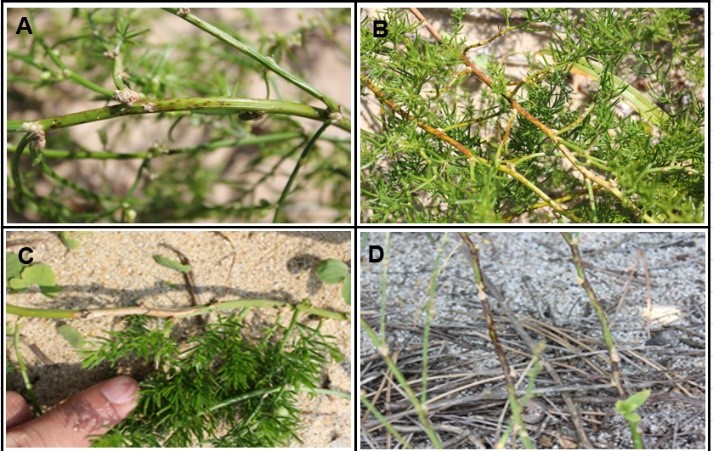
Asparagus kiusianus is known as the only endemic asparagus species in the world that grows naturally in Japan, and is designated as an endangered species. This plant is attracting worldwide attention as a useful genetic resource because it can be hybridized with edible asparagus, and immediate conservation measures are required.Previous studies by the Principal Investigators have described new diseases caused by several species of phytopathogenic fungi that are capable of infecting Asparagus kiusianus. In addition, the principal investigators’ field survey revealed that the lesions on naturally infected diseased plants were localized, with few individuals infected systemically, suggesting that wild strains in their native habitats may have acquired disease resistance during the course of evolution. Therefore, we will conduct research on the “creation of conservation seeds” that take into consideration the native reproductive environment and ecosystem by (1) elucidating the disease development mechanism of P. hamatamabuki by introducing alternative hosts and analyzing environmental genomes, (2) elucidating the genetic characteristics of disease-resistant traits and heritability of disease resistance by using interspecific hybrids and hybrid progeny, and (3) elucidating the reproductive characteristics of disease-resistant strains by analyzing environmental genomes. (2) Research on “creation of conservation seeds” in consideration of the breeding environment and ecosystems of native habitats.
Reproductive chart and ecology of Asparagus kiusianusFilamentous fungal disease of Asparagus kiusianus found in its native habitat