Balancing Rare Species Conservation and Agriculture in a World Natural Heritage Site (Amami-Oshima Island)
Balancing Rare Species Conservation and Agriculture in a World Natural Heritage Site (Amami-Oshima Island)
On Amami-Oshima Island (Kagoshima Prefecture), a World Natural Heritage site, the population of the Amami rabbit, a Special Natural Monument of Japan, has recovered as the eradication of invasive mongooses has progressed. At the same time, damage to the bark and seedlings of tankan citrus, one of the island’s main crops, has been spreading. Because the rabbit is protected, population control by capture is difficult, and “separating habitats” with fences and other barriers is the main countermeasure. Based on interviews with farmers, municipalities, Kagoshima Prefecture and the Ministry of the Environment’s Amami Wildlife Conservation Center, we examine the actual damage and countermeasures, how support programs work, and the challenges farmers face, and consider how rare species conservation and local agriculture can coexist. This research is supported by the ESPEC Foundation for Global Environment Research and Technology (FY2026) and received the ESPEC Prize for the Encouragement of Environmental Research.
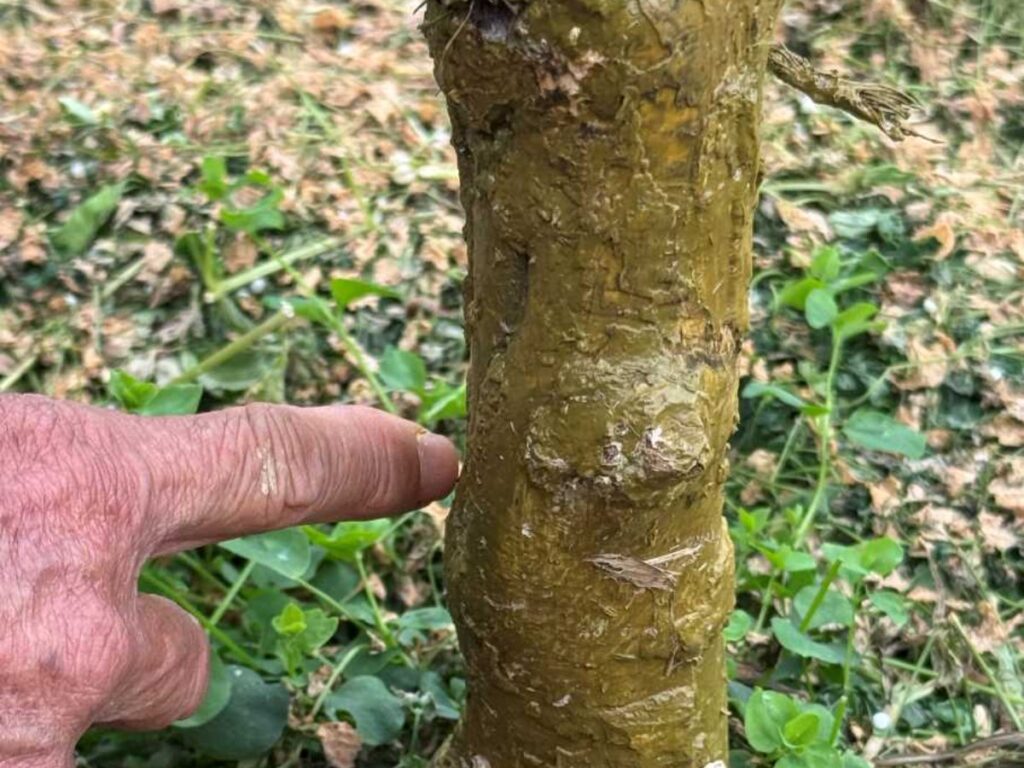
A tankan citrus trunk gnawed by Amami rabbits (April 2026)